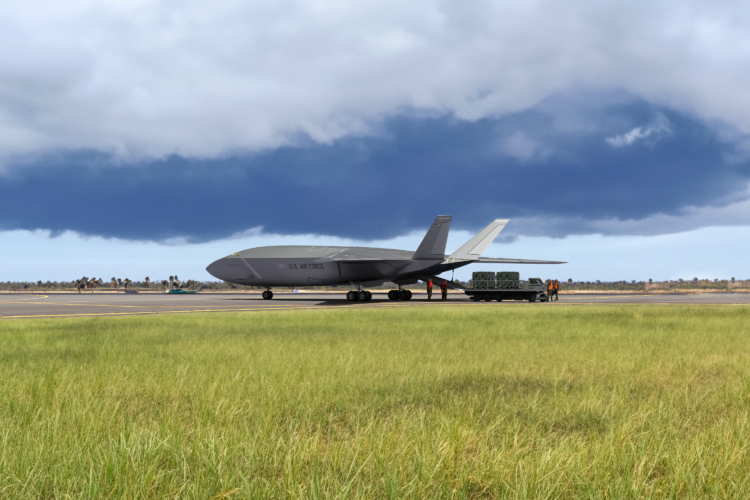
Revolutionizing Defense Capability with Natilus Blended-Wing-Body Aircraft
Technological innovation is key to increasing efficiency and lowering costs to operate across countless industries that enable our way of life. There are two industries that are critical to modern society but continue to lag behind the technology curve: aviation and defense.
Natilus is developing a family of next-generation, blended-wing-body (BWB) aircraft that significantly enhance aerodynamic efficiency and payload carrying capacity for the commercial freight sector. This will bring a step-function optimization to companies that currently rely on outdated and inefficient modes of transport. It will commoditize air freight.
Natilus is also poised to capitalize on the growing threat in the Indo-Pacific region and evolving defense requirements, from aerial refueling to strategic airlift, with the added value of autonomous capabilities. Natilus and a leading defense tech company have partnered to pursue and bid on the United States Air Force Next Generation Air-refueling System (tanker) contract valued at $40B; a proof point on the extensibility of our platform for air cargo – and beyond.
Unlike traditional tube-and-wing aircraft, which have a distinct cylindrical fuselage and wings, the BWB design integrates the body and wings seamlessly and offers at least a 40% reduction in CO2 emissions. The combination of aerodynamic efficiencies and expanded operational use cases strategically positions the Natilus BWB for both the commercial and defense sector.
Aerodynamic Efficiency:
The blended-wing-body design significantly reduces drag, making these aircraft more aerodynamically efficient than their conventional counterparts. This reduction in drag translates into decreased fuel consumption of at least 40% and lower operational costs, a critical factor for the military’s budget-conscious operations and need to extend range and capabilities into the Indo-Pacific region.
Increased Cargo Capacity:
One of the standout features of Natilus’ BWB aircraft is the patent-pending, diamond-shaped cargo bay. This configuration can accommodate approximately two and a half times as much cargo as traditional aircraft, making them invaluable for transporting fuel, equipment, and other supplies efficiently. This extra capacity can streamline military logistics and deployment efforts.
Autonomous Capability:
In partnership with a leading defense technology company, Natilus’ BWB aircraft are not only efficient and capacious but also equipped with cutting-edge autonomous capabilities. This means that these aircraft can operate optionally piloted or without a human crew, extending range and allowing for operations in a contested environment. Autonomous BWB aircraft can be deployed for missions where human pilots’ safety might be at risk, or they can be operated remotely, providing unmatched flexibility in mission execution and scalability.
Blended-Wing-Body Defense Applications
Aerial Refueling Missions:
Natilus’ autonomous BWB aircraft can serve as highly efficient tanker aircraft, providing fuel to fighter jets, unmanned aircraft, and other military planes while eliminating the need for a human crew in high-risk refueling scenarios. Their enhanced fuel efficiency and larger fuel capacity make them ideal for this role, ensuring that missions can be executed with precision and endurance.
Cargo Transportation:
Autonomous BWB aircraft offer the same advantages in cargo transportation, with the added benefit of reduced human risk. These aircraft can efficiently transport equipment and supplies with the volume-centric, diamond-shaped cargo bay, ensuring timely deliveries in both conventional and low-infrastructure operational theaters. Where available, Natilus aircraft are also designed to seamlessly integrate with existing infrastructure and operations much like a traditional airplane.
Drone Swarm Deployment:
With its increased payload capacity, a Natilus BWB aircraft is ideally suited for safely carrying and deploying smaller UAVs (uncrewed aerial vehicles) to swarm a contested area. Its larger cargo area means more drones can be launched in one flight to create a larger swarm. With autonomous capabilities, Natilus is the more effective and safe option.
Humanitarian Missions:
The capabilities of Natilus’ BWB aircraft extend to humanitarian missions as well. In disaster-stricken regions, where access may be limited and conditions hazardous, autonomous aircraft can be deployed for aid and relief delivery, enhancing the USAF’s ability to respond swiftly and effectively to crises worldwide. With the ability to take off and land on shorter runways, this further allows Natilus aircraft to get where others cannot.
Natilus’ groundbreaking Blended-Wing-Body aircraft, with unrivaled aerodynamic efficiency, increased cargo capacity, and autonomous capabilities, are ready to enhance today’s missions and open doors to new capabilities that will usher in a new era of military aviation. As technology continues to evolve, innovations like the Natilus BWB design will play a pivotal role in ensuring the effectiveness, sustainability, and air superiority of the United States in the 21st century and beyond.
Q&A With Ameriflight
Alan Rusinowitz, CEO and President
Ameriflight
Ameriflight is the largest Part 135 Cargo airline in the United States. As CEO and President, Alan is responsible for amplifying the company’s vision as the unparalleled leader in scalable, outsourced aviation services to the regional express airfreight market by planning and executing current and future business strategies. He is responsible for the company’s strategic vision, culture, and overall direction covering all aspects of the business, including the company’s operational performance, business objectives, and revenue generation.
With over 40 years in the industry, Rusinowitz joined the Ameriflight team in 2022 with an extensive background in aviation. Prior to Ameriflight, he served 22 years with a cargo airline as Executive Vice President and Chief Operating Officer. Notably, he was a key leader in overseeing the development and implementation of the company’s strategic business goals and objectives, as well as successfully leading the stock sale of the company and its subsidiaries.
We spoke with Alan about the future of air cargo operations and Ameriflight’s role in realizing that future.
Ameriflight is the largest US-based Part 135 operator. As such, how do you see the future of air cargo operations and what needs to be done to grow and make the industry more competitive with shipping?
Rusinowitz: As we’ve seen over the past decade or so, the demand for air cargo operations has increased drastically as online shopping and the expectation for quick delivery across large distances has increased. In an effort to remain competitive, customers will continue to push for fast solutions for cargo transportation, which is largely fulfilled by our industry. As cargo airlines and customers continue to outgrow previous solutions, we’ll need to improve efficiency, lower costs, and combat barriers.
In January, Ameriflight signed a purchase agreement for 20 Natilus remote-piloted regional air freighters, marking Natilus’ first sale of its blended-wing-body (BWB) Kona aircraft to a U.S.-based customer. What is the significance of this sale for the future of Ameriflight? What do you see as the greatest assets this new fleet of purposefully built Natilus cargo aircraft brings to your company?
Rusinowitz: As a leader in the aviation industry, and even more so in the Part 135 Cargo niche, Ameriflight must continue to be a pioneer when it comes to innovative solutions for growth and maintenance. Pairing ourselves with Natilus, which is creating technology at the forefront of autonomous innovation is the next step for us. The greatest advantages we see the new fleet bringing to Ameriflight is lower costs of operation, increased range, and growth roadblock solutions.
How will your company use Natilus aircraft to expand its cargo business (in terms of revenue and augmented business operations worldwide)?
Rusinowitz: The Natilus Kona, which we have on order, is comparable in size to our largest aircraft and has a greater than 7,500-pound payload which is right in line with our current and pending customer base and well-suited for what we do best – short-to-medium-haul flights, transporting high priority freight. Our intention is to use the aircraft to supplement our integrator operations and grow our 24/7, on-demand expedited supply chain solutions (ESCS) products, developing new areas of business. In addition to that, the long-range capability of the Kona opens up many new doors. One area of particular interest in regard to expanding our cargo business at the moment is our entry into government transportation contracts.
Are there routes not being served today which could be fulfilled by Natilus aircraft? What opportunities will this bring to you?
Rusinowitz: We’re seeing route demand from a number of avenues we’re not currently able to facilitate due to various reasons, such as aircraft quantity and range limitations. The addition of the Natilus aircraft to our fleet will allow us to remove certain growth roadblocks and take on these pending opportunities, of which include those government cargo contracts, as well as military contracts both state and federal.
There is currently a pilot shortage which can severely impact air cargo operations, especially as passenger travel expands. How can remote-piloted vehicles, such as the fleet of Natilus aircraft solve some of these issues to enhance operations?
Rusinowitz: The shortage of pilots has been a pain point in the aviation industry for years, and will be for many more years to come. There is also an impending aircraft shortage. As current cargo fleets continue to age and eventually retire, there will not be enough aircraft with the needed capabilities and the appropriate price tags to replace them. This lack of pilots and suitable aircraft can easily lead to stagnation, crippling the growth sustainability and growth potential of cargo airlines. This is especially true with airlines, like Ameriflight, who provide an important middle-mile service to legacy cargo carriers and companies. To solve both issues, innovation, like a new multi-service sector unmanned aircraft, is needed to maintain current business and provide an avenue for expansion.
Natilus has publicly announced its commitment to sustainability, and in particular, to designing aircraft and furthering new fuels that lead to more economical operations for clients. What are your thoughts in this arena?
Rusinowitz: Long-term economic growth without negatively impacting the environmental aspect is a notion on the minds of all big players in the aviation industry, and that’s no different for us. What you all are doing with the Kona is a multi-win when it comes to sustainability. First, the blended wing body (BWB) design provides reduced fuel consumption leading to lower costs, as well as the environmental benefit of lower emissions. Second is the ability to use an alternative SAF fuel to once again lower costs and emissions. Lastly, the ability to modify the aircraft to utilize alternate power sources, like hydrogen-powered engines, as they are developed and certified is inviting and I look forward to that progress.
Where do you expect the greatest growth in the worldwide air cargo business to be within the next decade and why?
Rusinowitz: If I could predict that, I would have Wall Street banging down my door. Jokes aside, for Ameriflight, I see sustainable growth through extension of the middle-mile air delivery network to additional remote areas, reducing trucking requirements. Additionally, I see an increase in military cargo delivery needs due to the Armed Forces pilot shortage.
Natilus Taps ZeroAvia To Supply Hydrogen-Electric Powertrain Option
Natilus has selected ZeroAvia to supply its hydrogen-electric powertrain as an option for the autonomous, blended-wing-body (BWB) Kona aircraft.
As part of its new strategic partnership, announced May 25, U.S./UK-based ZeroAvia will offer its 600-kW ZA-600 fuel cell powertrain as an option for the Natilus Kona, an autonomous cargo feeder aircraft with a 900-nm range and 4.3-ton payload. The aircraft’s conventional version, currently under development by the San Diego-based startup, will be powered by two Pratt & Whitney Canada PT6A-67d turboprop engines.
Speaking to the AAM Report, Natilus CEO Alexey Matyushev said the Kona’s BWB configuration is a “natural fit” for hydrogen-electric propulsion, noting that the aircraft’s large, diamond-shaped cargo bay configuration holds 60% more storage volume compared to traditional tube-and-wing aircraft.
Read the entire article on AviationWeek
Natilus Selects ZeroAvia ZA600 Hydrogen-Electric Engines for Zero-Emission Propulsion
Key Points:
- Kona, first of the Natilus fleet, to have option to be powered by ZeroAvia ZA600 Hydrogen-Electric Engine for zero emission propulsion.
- Kona’s BWB design allows for increased hydrogen storage, maintaining payload capacity and range, making it an ideal solution for sustainable air cargo transportation.
- ZeroAvia’s 600kW prototype hydrogen-electric engine is already in flight testing with certification on track for 2025.
SAN DIEGO & HOLLISTER, CA (May 25, 2023) – Natilus, a leading innovator in designing and developing new autonomous blended-wing body (BWB) cargo aircraft, and ZeroAvia, the leader in zero-emission commercial aviation, have announced a strategic partnership to jointly develop hydrogen-electric engines for the Natilus Kona cargo aircraft. ZeroAvia’s ZA600 will be the sole hydrogen-electric propulsion source offered for the novel Kona short-haul feeder UAV, with the partnership focused on delivering zero-emission and lower cost operations.
The Natilus Kona, with its revolutionary BWB design, offers increased volume for hydrogen storage, potentially transforming the air cargo delivery industry to one with low-cost, low-carbon emissions, while also extending flight range. The partnership with ZeroAvia will leverage their expertise in hydrogen-electric powertrain technology with Natilus’ unique design to create a scalable, long-range, and zero-emission air cargo delivery solution for the entire industry.
Natilus recently validated the performance of the BWB design with flight testing of a quarter-scale Kona prototype aircraft, following three years of extensive wind-tunnel testing, while ZeroAvia has now conducted eight test flights of its prototype ZA600, 600kW engine in a 19-seat testbed aircraft.
Aleksey Matyushev, Co-founder and CEO of Natilus, said: “Natilus has a long-term commitment to being a responsible steward of our environment, instituting practices that can protect the environment through continual improvements to save fuel and water, reduce waste, air emissions, noise, and material consumption. The Natilus-ZeroAvia partnership goes further, bringing the talents and innovations of the two companies together to deliver much-needed innovation in the air cargo delivery industry and multiple solutions for our customers.”
Val Miftakhov, Founder and CEO of ZeroAvia, said: “Given Natilus’ impressive order book and corresponding technology development, working together on integrating the ZA600 as a line-fit engine for Kona can multiply the emissions and costs benefits that are already interesting cargo operators. We all depend on air cargo operators, and some communities depend on them absolutely, so improving the economics and environmental impacts of these operations while increasing service levels is a massive opportunity.”
ZeroAvia has demonstrated a prototype of the ZA600 with world-first flight testing of a retrofitted 19-seat aircraft in flight with its prototype. The company has twice held the record for demonstrating the largest hydrogen fuel cell aircraft and has struck several important agreements with airframe OEMs relevant to ZA600 – including Textron Aviation, manufacturer of the Cessna Caravan, and private aircraft manufacturer Otto Aviation.
Natilus currently has more than $6.8 billion in order commitments, and 460+ aircraft in pre-orders, from companies including major airlines and integrators: Ameriflight, Volatus Aerospace, Flexport, Astral, Aurora International, and Dymond. The company is now working on construction of a full-scale Kona technology demonstrator, which will have a wingspan of 85 feet (26 meters).
About ZeroAvia
ZeroAvia is a leader in zero-emission aviation, focused on hydrogen-electric propulsion as the key to delivering clean aviation. The company is developing two engine classes initially, targeting a 300-mile range in 9–19 seat aircraft by 2025, and up to 700-mile range in 40–80 seat aircraft by 2027. Based in the US and the UK, ZeroAvia has already secured experimental certificates for three prototype aircraft from the CAA and FAA, passed significant flight test milestones, secured a number of key partnerships with major aircraft OEMs, secured $10B in pre-orders from a number of the major global airlines, and is on track for commercial operations in 2025. For more, please visit ZeroAvia.com, follow @ZeroAvia on Twitter, Instagram, and LinkedIn.
About Natilus
Natilus was co-founded by Aleksey Matyushev and Anatoly Star in 2016 to expand and democratize the air cargo transport industry by designing and manufacturing a new fleet of blended wing body (BWB) autonomous freight aircraft that will increase volume by 60% and lower costs by 60%, as well as help airline customers reach their sustainability goals. Natilus aircraft use existing ground infrastructure and standard air cargo containers, to produce an innovative turnkey solution for customers.
The Natilus family of cargo aircraft includes:
- Kona – 3.8 ton payload (category) short-haul feeder domestic UAV
- Alisio – 60 ton payload medium/long range UAV
- Nordes – 100 ton payload long-range UAV
Follow Natilus: @NatilusAero on Twitter, and LinkedIn.
Natilus Fact Sheet: https://natilus.co/natilus-faqs/
Media Kit: https://natilus.co/media-kit
Autonomous Cargo Aircraft Developer Natilus Begins Flight Testing
Natilus, a California-based aerospace start-up developing autonomous cargo airplanes, has successfully flown a subscale technology demonstrator for the first time. The company intends to introduce a family of remotely piloted cargo freighters featuring a unique blended-wing-body (BWB) design that will be capable of carrying more cargo than traditional airplanes of comparable size. Its initial offering will be the Kona, the smallest model in its planned fleet.
Natilus says the initial flight tests of its quarter-scale Kona demonstrator aircraft have validated the performance of the BWB design after three years of extensive wind-tunnel testing. The flights took off from a private runway in Southern California, east of San Diego. During the flights, the aircraft reached speeds of about 70 mph (110 kph), according to Natilus.
“The first flights were controlled by a remote pilot to validate ‘open loop’ aircraft stability without autopilot,” a Natilus spokesperson told FutureFlight. “This is a huge milestone for aviation as, previously, BWBs were unstable and had to be flown with a ‘closed loop’ autopilot code.” Natilus is now working to integrate its own autopilot system into the aircraft. While the company’s cargo fleet will be highly autonomous, remote pilots in ground stations will monitor all flights and can take over control of an aircraft if necessary.
With six flight tests under its belt, Natilus is now shifting its focus to the construction of a full-scale Kona technology demonstrator, which will have a wingspan of 85 feet (26 meters). “We are fully focused on completing the full-scale Kona prototype,” said Natilus co-founder and CEO Aleksey Matyushev. “Our Kona remotely piloted aircraft will be capable of carrying over 9,000 pounds (4.3 metric tons) of freight and will open new markets worldwide. The progress of Natilus in developing autonomous cargo aircraft is a game changer in the logistics industry, providing an efficient and cost-effective solution for shipping goods across oceans.”
Read the entire article on FutureFlight.aero
Successful Flight of Natilus Kona Prototype Validates Performance of Unique Blended Wing Body Design, Paving the Way for Completion of Full-Scale Autonomous Cargo Drone
Key Points:
- Natilus successfully flies Kona sub-scale prototype, validating performance of the company’s unique blended wing body design.
- Kona flight paves the way for completion of a full-scale autonomous cargo drone.
- Natilus recently completed both vertical tails for its full-scale prototype, and announced the upcoming acquisition of propellers from Hartzell, gearing up for the manufacture of the engine test stand.
- Natilus advanced autopilot code will allow air freight operators to scale their operations without compromising safety or efficiency.
- To overcome the challenges of pilot shortages, Natilus is spearheading the development of innovative remote piloting technology. The Kona prototype plays a crucial role in integrating Natilus’ autopilot code into the full-scale demonstrator.
- Natilus has announced purchase commitments for the delivery of over 460 Natilus aircraft, amounting to $6.8 billion in total to date.
SAN DIEGO (April 19, 2023) – Natilus, an innovative company producing a fleet of highly cost-efficient autonomous cargo aircraft, has successfully completed multiple flights of the subscale prototype of its Kona regional aircraft. The flight tests mark a significant milestone for Natilus and for the autonomous cargo aircraft industry by validating wind tunnel tests conducted over three years, testing the aerodynamic performance of the Natilus unique blended-wing-body (BWB) aircraft design.
The subscale prototype of the Kona aircraft took off from a private runway in Southern California and reached speeds of 70 mph. One of the key challenges with the BWB design has been stability – and the test flights validated that the Natilus configuration can fly without the help of a complex autopilot system.
“We are fully focused on completing the full-scale Kona prototype” stated Aleksey Matyushev, Natilus Co-Founder and CEO. “Our Kona remotely piloted aircraft will be capable of carrying over 9,000 pounds (4.3 metric tons) of freight and will open new markets worldwide. The progress of Natilus developing autonomous cargo aircraft is a game-changer in the logistics industry, providing an efficient and cost-effective solution for shipping goods across oceans.”
Natilus has also recently completed the full-scale prototypes of both vertical tails, validating the aggressive timetables to 1st flight. The company will receive Hartzell propellers in May, gearing up for the manufacture of the engine test stand.
Natilus is spearheading the air freight industry’s efforts to overcome the challenges brought about by the current shortage of pilots and has prioritized the development of innovative remote piloting technology, with the Kona prototype serving as a key component in correlating their own autopilot code for the full-scale demonstrator. This innovative approach will allow air freight operators to scale their operations without compromising safety or efficiency.
Natilus Kona Aircraft
The 85 ft. full-scale Kona demonstrator, the smallest of the Natilus fleet, will be the largest commercial air cargo drone targeted to fly in 2024. Kona will also help to open new markets for air cargo as the vehicle can land and take off on unpaved runways as short as 800 meters. The patent-pending ‘Diamond’ cargo-bay allows Natilus to offer 60% more volume and lower flight costs by 60%. Natilus aircraft can hold a large configuration of standard pallets and outsized cargo, without a contouring requirement.
Natilus Investment and Purchase Commitments
Natilus announced last month that the company has received total commitments to date for $6.8B, for delivery of more than 460 aircraft. Supplier partnerships include agreements with Janicki for composite designs; Pratt & Whitney Canada for engines; Collins Aerospace for specialized loading systems; Siemens’ NX™ software for computer-aided design, as well as purchase agreements from customers, including Ameriflight, Astral Aviation, Aurora, Dymond, Volatus Aviation, Flexport, and others, currently undisclosed.
About Natilus
Natilus was founded in 2016, to revolutionize and democratize the air cargo transport industry by designing and manufacturing a new fleet of blended wing body (BWB) autonomous cargo aircraft that will commoditize airfreight, while reducing air freight emissions by half. Natilus aircraft use existing ground infrastructure and standard air cargo containers, to produce an innovative turnkey solution for customers.
The Natilus family of cargo aircraft includes:
- Kona – 3.8 ton payload (category) short-haul feeder domestic UAV
- Alisio – 60 ton payload medium/long range UAV
- Nordes – 100 ton payload long-range UAV
Natilus Fact Sheet: https://natilus.co/natilus-faqs/
Media Kit: https://natilus.co/media-kit
Flight Video: https://www.youtube.com/watch?v=FpIEG1G71p8
Volatus Aerospace Receives Canadian Transportation Agency License for Drone Cargo Services
Volatus Aerospace Corp. (TSXV: VOL) (OTCQB: VLTTF) (“Volatus” or “the Company”) is pleased to announce that the Company has been issued a Canadian Transportation Agency (CTA) License for domestic service, all-cargo aircraft. This license builds on the existing capabilities authorized by CTA licenses held by Volatus subsidiaries Partner Jet Inc. (Volatus Aviation) and Synergy Aviation.
The addition of this license allows the Company to build its drone cargo capability under the Volatus brand in preparation for the anticipated Transport Canada/FAA regulatory changes.
“Positioning Volatus with this license is an important step toward our long-term vision of drone cargo operations, when we are scheduled to take delivery of the first 3.8 tonne Natilus Kona uncrewed regional feeder aircraft (announced in a press release on January 25, 2022),” says Glen Lynch, CEO of Volatus Aerospace Corp.
Read the entire article on YahooFinance.com
UPS Feeder Airline Intends To Buy 20 Pilotless Cargo Planes
Ameriflight attracted by startup Natilus’ promise of lower operating costs.
A large, regional feeder airline for UPS and other overnight express carriers last week tentatively committed to buy 20 remote-controlled cargo planes, with a novel design, for middle-mile deliveries.
Ameriflight, which flies 156 small turboprop aircraft daily to more than 200 destinations in the U.S. and the Caribbean, signed a letter of intent with San Diego-based Natilus for 20 Kona feeder aircraft valued at $134 million, the companies announced.
Natilus is developing a family of pilotless aircraft it claims will increase cargo volume by 60% and cut carbon emissions in half, thereby making air shipments more affordable. The efficiency gains are possible because of carbon-fiber composite airframes and a blended-wing body — essentially a uniframe in which sections meld together — that creates more usable volume and better aerodynamics than a traditional airliner.
The absence of pilots also leaves more room for cargo.
Read the entire article on
FreightWaves
Natilus, Ameriflight Sign Accord For 20 Cargo Feeder UAVs
Natilus has signed a conditional purchase agreement with Ameriflight for 20 of its uncrewed regional freighters, marking the first sale of its blended-wing-body (BWB) Kona aircraft to a U.S.-based customer.
As the largest U.S.-based Part 135 operator, Ameriflight ships high-priority freight to and from remote areas across the U.S. on behalf of overnight express carriers like FedEx and UPS. The Dallas-based carrier’s freight services mostly consist of 1-to-2-hr. feeder flights using small aircraft like the Embraer EMB-120, Beechcraft 1900C and Fairchild Swearingen Metroliner. They are all aging platforms ripe for replacement by a more efficient aircraft like the Kona, Natilus CEO Aleksey Matyushev says.
“The way this aircraft was designed is to fly these sort of short-hopper feeder flights of around one to two hours, which is perfect for Ameriflight, although we can go up to six-and-a-half hours flight time,” Matyushev says. “This platform is meant to be a kind of replacement for their fleet, but still introducing new technology like autonomy and the blended wing.”
Read the entire article on
AviationWeek.com
Natilus Announces Purchase Agreement with Ameriflight for 20 Cargo Aircraft – Bringing Total Orders to $6.8 Billion for 460+ Aircraft
Key Facts
- Ameriflight places order for 20 Natilus autonomous feeder cargo aircraft valued at $134M in a strategic move to be the first regional U.S. carrier to develop a new roadmap for the future of air freight operations.
- Total commitments for Natilus now $6.8 Billion for delivery of 460+ aircraft.
- Natilus aims to address pilot shortages using its autonomous technologies.
SAN DIEGO (January 26, 2023) – Natilus, a U.S. corporation designing and producing the world’s first autonomous aircraft for efficient and sustainable freight transport, has announced that Ameriflight, an industry leader in freight operations, has become the first regional U.S. carrier to sign an Aircraft Purchase Agreement with Natilus. The Ameriflight agreement for 20 Natilus Kona feeder aircraft valued at $134M brings total commitments to $6.8 billion for delivery of 460+ aircraft.
Ameriflight is the nation’s largest Part 135 cargo airline, serving 200 destinations throughout the United States, Canada, Mexico, the Caribbean and South America – with more than 1,500 weekly departures. As a critical part of the supply chain with UPS being its largest customer, Ameriflight’s primary business is moving high priority air freight to and from remote areas across the country for overnight express carriers.
“Through this strategic partnership, we are positioning Ameriflight to build the roadmap for the future in cargo operations and be the first regional operator for Natilus in the United States,” said Alan Rusinowitz, President and Chief Operating Officer of Ameriflight. “Our goal is to grow our product and transform the way we do business through innovation and collaboration, and now through this new partnership with Natilus, Ameriflight will connect the world safely within a sustainable business model.”
“Innovation in design allows the Natilus fleet to carry more volume at lower costs, and the exploration of new sustainable fuels will lower carbon emissions,” explained Aleksey Matyushev, Co-Founder and CEO of Natilus “The Ameriflight agreement is a major move forward for the air cargo industry to strengthen the regional supply chain”.
The Natilus fleet of carbon fiber, blended-wing-body designed cargo aircraft offer a 60% reduction to cost of operations and cuts carbon emissions by half – enabling the opening of new and emerging markets in remote areas, where larger aircraft do not have the runway capacity and/or infrastructure to land, through both scheduled and specialized operations. This will provide needed medicines, food and other important goods to develop these outlying areas.
“Developing autonomous solutions that are purpose-built to address the needs of the air cargo market is one important step toward developing more robust long-term solutions,” continued Matyushev. “Autonomous technologies seek to utilize labor more efficiently by allowing a single pilot to control multiple aircraft, helping address the dire pilot shortage”.
About Ameriflight
Ameriflight is the nation’s largest Part 135 cargo airline. Founded in 1968, Ameriflight has grown from a small air charter and cargo service carrier to an international operator with 14 bases, 1,500 weekly departures, and 200 destinations. The company is headquartered in Dallas, TX and has more than 500 employees including over 150 pilots and over 100 aircraft. Ameriflight provides feeder services for overnight express carriers, as well as on-demand cargo charter services for customers with an array of priority shipping needs through its Expedited Supply Chain Solutions department. For more information, visit us at ameriflight.com.
About Natilus
Natilus was founded in 2016 to democratize the air cargo transport industry by designing and manufacturing a new fleet of blended wing body (BWB) autonomous freight aircraft that will commoditize airfreight while reducing air freight emissions by half. Natilus aircraft use existing ground infrastructure and standard air cargo containers to produce an innovative turnkey solution for customers.
The Natilus family of cargo aircraft includes:
- Kona – 3.8 ton payload short-haul feeder UAV
- Alisio – 60 ton payload medium/long range UAV
- Nordes – 100 ton payload long-range UAV
Follow us on LinkedIn: @Natilus.
Natilus Fact Sheet: https://natilus.co/natilus-faq/
Media Kit: https://natilus.co/media-kit/